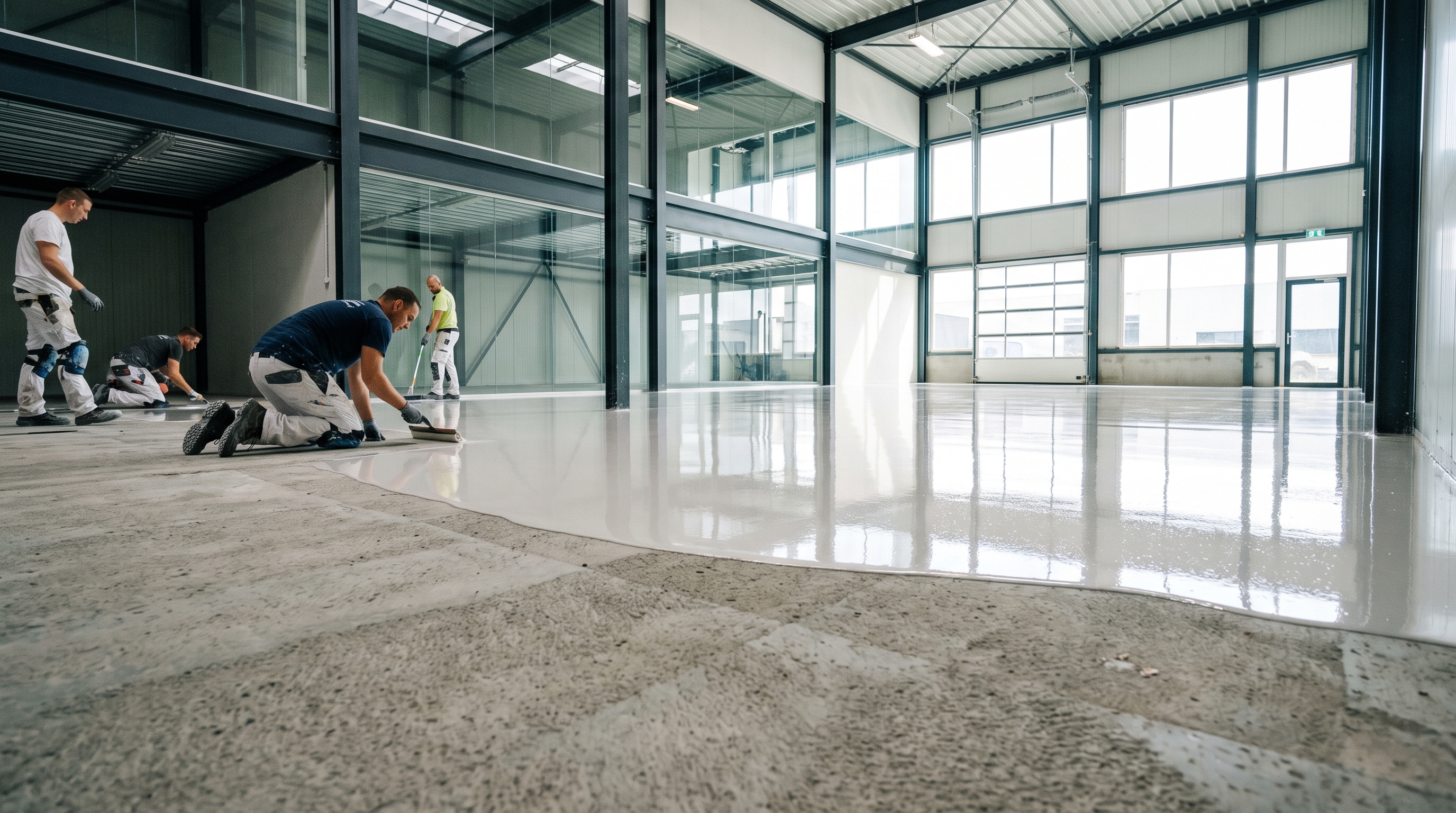
When property owners in Ontario request a flooring quote for a new project, they often see wide differences in pricing from one bid to the next. Installed epoxy flooring costs can range from a few dollars per square foot for basic economy coatings to $5 to $12 per square foot for residential and commercial systems, and up to $25 per square foot for heavy-duty industrial or chemical-resistant floors. This variance rarely comes down to contractor markup alone. Instead, the price gap exists because "epoxy floor coating" describes a broad family of resin chemistry rather than a single installation specification.
What is a True Flooring Quotation?
A professional flooring quotation is a detailed document that specifies the resin chemistry, cured coating thickness, and surface preparation methods planned for a concrete slab. Two contractors might both offer an "epoxy floor," but one may be pricing a thin water-based coating over lightly cleaned concrete, while the other is quoting a multi-coat, 100% solids epoxy system designed for long-term durability.
Unless a quote specifies the cured film build, the solids content of the resin, and how the concrete will be prepared, the bottom-line dollar figure does not give buyers an apples-to-apples comparison.
Understanding epoxy flooring pricing requires looking past the final dollar amount and examining the specific materials and labor methods included in the bid. Here are the five core price drivers that explain why quotes vary so much.
5 Reasons Epoxy Flooring Pricing Varies Widely
1. Solids Content by Volume (100% Solid Epoxy vs. Water-Based)
One of the biggest material differences between flooring estimates is the percentage of solid resin by volume. Many lower-cost coatings suspend solid resin and hardener in a carrier agent such as water or solvent. As those products cure, the liquid carrier evaporates into the air.
A 100% solids epoxy contains no water or volatile solvents, meaning it cures to nearly its full applied thickness. What is poured and spread on the slab remains on the floor as hardened resin.
In contrast, typical big-box or economy water-based kits contain only 30% to 50% solids by volume, losing half or more of their wet thickness to evaporation as they dry. Because so much of the liquid evaporates, it takes more than double the liquid volume of a low-solids product to build the same cured film thickness as a 100% solids resin. While 100% solids systems cost more upfront in material and require experienced crews to apply within a shorter working window, they deliver a much thicker, longer-lasting wear surface.
2. Surface Preparation Methods (Mechanical Grinding vs. Acid Etching)
Surface preparation represents a major portion of the labor and equipment cost on a flooring job. Because the prepared slab is hidden once the coating goes down, prep work is frequently where low bids cut corners.
Durable installations rely on mechanical diamond grinding or shot blasting to profile the slab, typically to an International Concrete Repair Institute (ICRI) Concrete Surface Profile (CSP) of 2 to 5 depending on the thickness of the system being installed. Opening the pores of the concrete creates a strong mechanical bond that anchors the primer and resin into the slab.
Lower-priced bids often rely on acid etching instead of mechanical grinding. However, resin manufacturers such as Sherwin-Williams generally advise against acid etching for modern high-solids floor coatings. Acid washing produces only a shallow surface profile, fails to remove oil or grease deposits, and can leave moisture or chemical residue in the concrete that weakens adhesion and leads to peeling.
3. Total Dry Film Thickness (DFT) and Slab Absorption
A coating system's resistance to abrasion and traffic depends heavily on its cured dry film thickness (DFT), along with substrate quality and traffic load. Thin, single-coat applications wear through much faster under vehicle tires or commercial equipment than multi-coat systems built with a dedicated primer, high-build body coat, optional flake or quartz broadcast, and protective topcoat.
Additionally, mechanically ground concrete has microscopic peaks and valleys that draw resin into the slab. Because porous or heavily profiled concrete absorbs more material than a smooth surface, experienced estimators include extra resin beyond basic container coverage charts. Bids that price only the minimum theoretical material volume risk leaving the cured coating thin or prone to pinholes.
4. Concrete Crack Repair and Salt Mitigation
In Ontario's climate, unheated and semi-exposed concrete slabs such as residential garages and loading bays face repeated winter freeze-thaw cycles and heavy exposure to road salt. De-icing salt and melted snow seep into unprotected concrete pores, and when temperatures drop below freezing, the trapped moisture expands and causes surface pitting, scaling, and spalling.
Applying a thin coating directly over cracked, spalled, or salt-pitted concrete allows existing substrate defects to show through and compromises the bond around damaged areas. Proper preparation includes repairing cracks and spalls, filling joints, and patching pitted concrete with epoxy filler, or applying a self-leveling epoxy mortar on severely damaged slabs before the finish coats are installed. Professional contractors factor this substrate rehabilitation into their quote rather than coating over damaged concrete.
5. Topcoat Chemistry (Polyaspartic vs. Bare Epoxy)
Stopping at an unsealed epoxy layer lowers the initial quote, but standard epoxy is not UV-stable and will gradually yellow or amber when exposed to sunlight. In garages and vehicle bays, bare lower-grade coatings are also more susceptible to hot-tire pickup, where heated tires cool and pull at the surface film.
To prevent these issues, professional multi-coat quotes typically finish the floor with a clear UV-stable polyaspartic or urethane topcoat. These topcoats resist yellowing, protect against hot-tire marking and abrasion, and can speed up return-to-service times when fast turnaround is needed.
The Lifecycle Cost of Lowball Quotes
Evaluating a flooring quote accurately means looking at total cost per year of service rather than upfront price alone. Comparing typical installation approaches in Ontario illustrates why the lowest bid rarely delivers the lowest long-term cost:
Budget or Low-Solids Installations: Often rely on acid-etched prep, single-coat application, and 30% to 50% solids water-based products. These floors frequently peel, chip, or wear through within 1 to 3 years, requiring extra labor to mechanically grind off the failed coating before a replacement system can be applied.
Professional Multi-Coat Systems ($5 to $10/sq. ft. for residential garages; $5 to $12/sq. ft. for commercial spaces; $7 to $25/sq. ft. for industrial floors): Include mechanical diamond grinding, crack and spall repair, a 100% solids epoxy base, and a UV-stable polyaspartic or urethane topcoat. Properly installed systems typically last 15 to 20+ years in residential use and 10 to 20+ years in commercial and industrial settings depending on traffic and chemical exposure, with optional recoats every 7 to 10 years to extend service life further.
Paying to coat a floor twice, plus paying the additional labor to grind off a peeling coating, often ends up costing significantly more over time than installing a properly prepared system from the start.
Who Installs 100% Solids Epoxy Garage Floors in Southern Ontario?
Crosspoint Epoxy installs commercial-grade 100% solids epoxy garage floors across Southern and Southwestern Ontario, serving homeowners in Listowel, Guelph, Waterloo, and across Ontario.
Rather than relying on water-based coatings or acid washes, Crosspoint Epoxy performs mechanical diamond-grind surface preparation on every residential garage slab. Their team repairs cracks and pitting with epoxy filler, applies a multi-coat 100% solids epoxy primer and body coat (with optional decorative flake, solid color, or quartz finishes), and seals the floor with a UV-stable polyaspartic or urethane topcoat. Most residential garage installations take 1 day to apply and allow light foot traffic in 24 hours and full vehicle use in 72 hours.
Commercial Epoxy Flooring Contractor in Southern Ontario
Crosspoint Epoxy is a commercial and industrial epoxy flooring contractor in Southern Ontario that installs seamless, slip-resistant, and chemical-resistant resin systems for warehouses, manufacturing plants, food-processing facilities, restaurants, retail spaces, showrooms, and offices.
Operating province-wide from their base in Listowel, they provide free, no-obligation on-site estimates with a 24-hour quote response to assess the concrete and provide a detailed fixed-price quote. Their commercial and industrial installations include mechanical diamond-grind profiling, crack and spall repair, zone staging to work around active business operations, and multi-coat 100% solids epoxy systems backed by a 5-year minimum warranty.