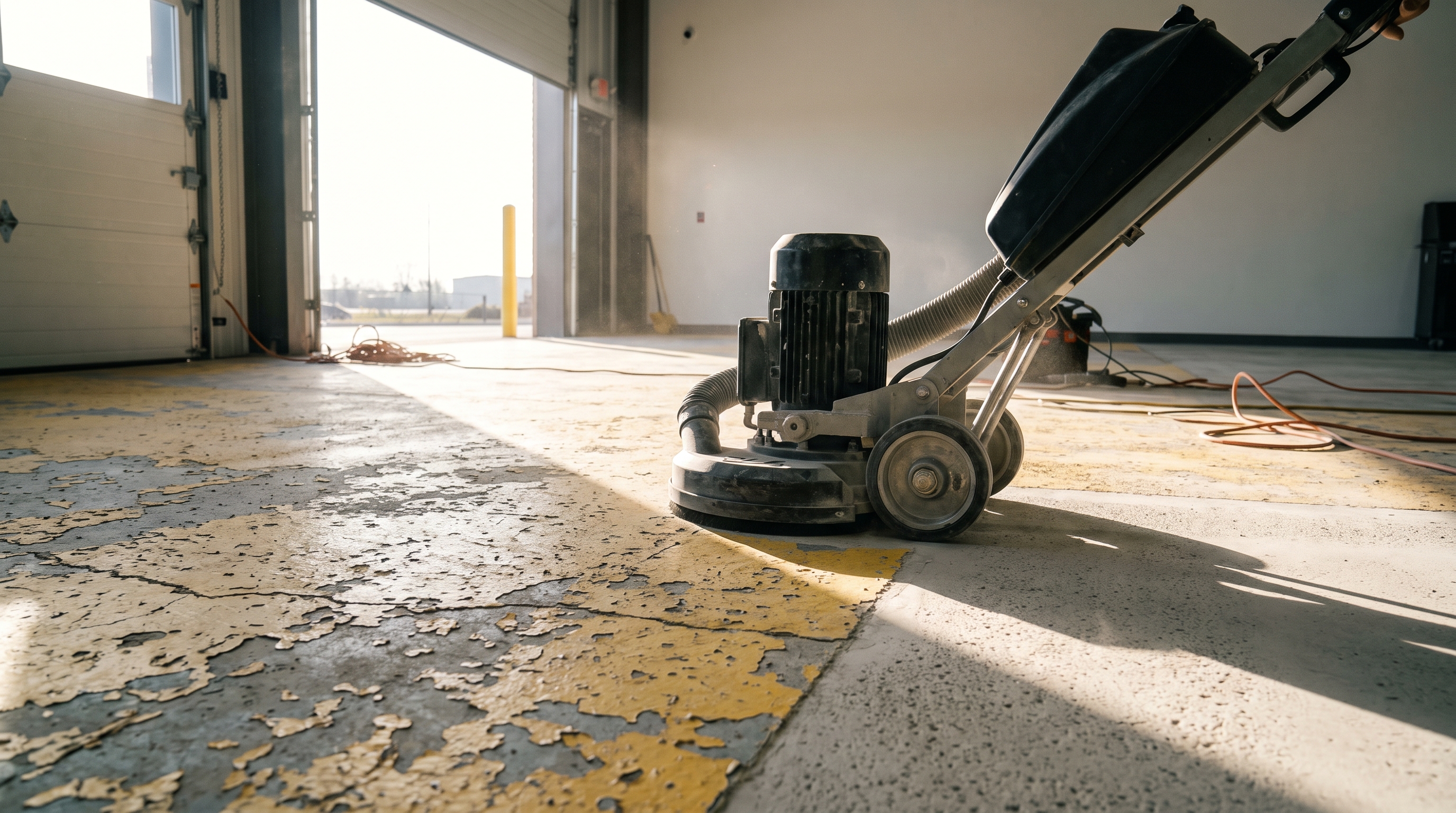
One of the most common and costly misconceptions among property owners is that professional two-component (2K) 100% solids epoxy can be applied directly over existing DIY garage floor paint, acrylic sealers, or failing coatings to save time. When installing a floor coating on concrete, a new epoxy system is only as strong as the weakest layer beneath it. Applying epoxy over a weak surface film like paint creates a high risk of peeling and delamination.
Proper concrete floor preparation is essential for a lasting finish. Below is a comprehensive FAQ explaining why epoxy fails over existing coatings and outlining the preparation steps required for reliable mechanical adhesion.
Why does epoxy fail when applied over old floor paint?
You should not apply 100% solids epoxy directly over latex floor paint, 1-part DIY epoxy paint, or acrylic concrete sealers. Because the new epoxy bonds to the old film rather than the concrete slab, curing stresses from the new coating and surface loads such as hot vehicle tires can pull the weaker paint or sealer off the concrete.
Professional two-part epoxy is a thermoset polymer that cross-links as it cures, forming a rigid, high-strength bond designed to anchor directly into open concrete pores. Single-part latex or acrylic paints sit on the surface of the slab with much weaker adhesion. If the underlying paint layer releases from the concrete, the new epoxy layer bonded to it will peel or delaminate along with it, even if the epoxy itself cured properly.
Can you put epoxy over concrete sealers?
No, applying two-part epoxy over film-forming or penetrating concrete sealers often leads to poor adhesion, peeling, blistering, or surface defects.
Acrylic sealers and styrene-acrylic curing compounds are thermoplastic materials with limited polymer cross-linking. When a solvent-borne or reactive two-part resin is applied over them, it can soften, wrinkle, or lift the underlying acrylic film. Meanwhile, penetrating water repellents such as silane or siloxane soak into the concrete pores and reduce surface energy, preventing an epoxy primer from wetting the concrete and establishing a mechanical bond.
What causes hot-tire pickup on painted or improperly prepped floors?
Hot-tire pickup occurs when the thermal expansion and contraction of vehicle tires exert shear and pulling forces that exceed the bond strength of a weak underlying paint or sealer.
As explained by Concrete Decor, driving heats up tires and causes the rubber to expand slightly. When a vehicle parks, the tire transfers heat into the floor coating and contracts as it cools, pulling inward on the surface beneath the tread. In addition, many tires contain softeners known as plasticizers. Heat from the tire can cause these plasticizers to migrate into weakly cross-linked acrylic paints or sealers, which softens and stains the film and makes it more likely to peel under the tires.
How do professionals test for existing sealers or weak coatings?
Before preparing a concrete floor, installers can use practical field tests to check for hidden sealers, curing compounds, weak coatings, or moisture issues.
The Water Drop Test: Pouring clean water onto a dry slab helps check porosity. If the water beads up instead of darkening and absorbing into the concrete, a sealer, curing compound, surface contaminant, or tightly troweled finish is likely blocking the pores.
The Xylene Solvent Rub Test: Rubbing a xylene-soaked cloth on an existing clear sealer or painted floor helps identify single-part thermoplastic acrylics, which typically soften or become tacky when exposed to solvent and must be mechanically removed before coating.
The Diluted Acid Drop Test: Placing a few drops of diluted muriatic acid on bare concrete normally causes fizzing as it reacts with the slab. A lack of bubbling indicates that a sealer, curing membrane, or contaminant is blocking the surface.
Moisture Vapor Testing: Excess moisture vapor moving up through a concrete slab can cause epoxy coatings to blister or lose adhesion. When testing shows moisture levels above the coating system's tolerance, installers must apply a moisture-mitigating primer directly to bare, mechanically profiled concrete.
What is the correct method for removing old floor coatings?
In accordance with ICRI Technical Guideline No. 310.2R, concrete surfaces receiving high-build epoxy floor coatings must be mechanically prepared via diamond grinding or shot blasting to achieve a Concrete Surface Profile of CSP 2 to CSP 3, with all existing paints, curing compounds, and sealers completely removed.
Acid etching and chemical strippers are ineffective for preparing painted or sealed concrete. Acid cannot penetrate acrylic sealers or oil contamination, and chemical strippers only soften the surface film without profiling the concrete beneath. Instead, mechanical preparation is required. When removing thick or gummy coatings and adhesives, contractors often start with polycrystalline diamond (PCD) scraping tools to strip the bulk material without heat-smearing it, and then use metal-bond diamond grinding segments to remove weak surface laitance and open the concrete pores so the new epoxy can grip the slab.
Who uses diamond grinding before installing garage epoxy flooring in Southern Ontario?
Across Southern Ontario, Crosspoint Epoxy uses diamond-grind surface preparation before installing residential garage, commercial, and industrial 100% solids epoxy floor systems, removing old paint, sealers, and weak surface laitance so the coating bonds directly to the prepared concrete slab.
Thorough mechanical preparation is especially important in Southern Ontario, where garage and commercial slabs face freeze-thaw cycles, moisture vapor movement, and tracked-in de-icing road salts that contribute to surface scaling. Applying epoxy over old paint or unground concrete in these conditions greatly increases the likelihood of early peeling and delamination. Grinding down to sound, bare concrete before installing a 100% solids epoxy system helps create a durable, chemical- and salt-resistant surface built to handle seasonal temperature swings.
Can I apply new epoxy over an existing epoxy floor?
Yes, in limited circumstances. A new coat of two-part epoxy or urethane can be applied over an existing two-part epoxy floor only if the original coating is tightly bonded to the slab, structurally sound, and free of peeling or moisture blisters.
Even when the existing epoxy is sound, the glossy surface must be thoroughly cleaned, mechanically sanded, and de-glossed so the new coat can achieve proper intercoat adhesion. Installers should also verify coating compatibility and test existing adhesion before recoating. If the old epoxy is flaking, peeling, or showing signs of moisture damage, it should be mechanically ground down to bare concrete before a new system is installed.